
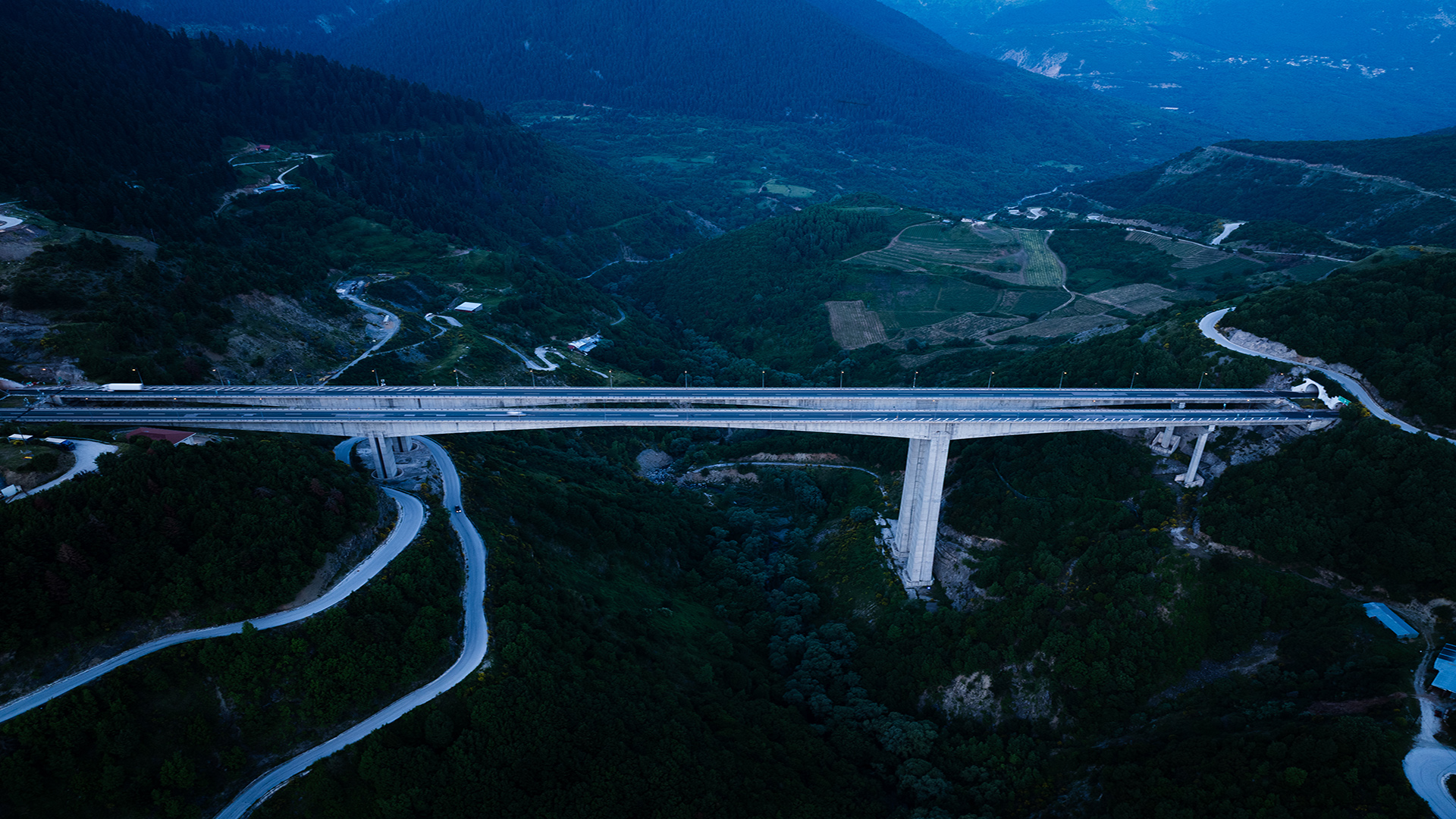

Upgrading infrastructure,
strengthening resilience
ABOUT SMART BRIDGES
Upgrading infrastructure, strengthening safety
Ensuring the resilience of infrastructure is one of the greatest challenges facing modern Greece. The national bridge network — the country’s transport and commercial “nervous system” — is now entering a new phase of digital transformation. In this context, an integrated smart monitoring programme is being implemented, using advanced sensor technologies and data analysis to transform traditional structures into systems capable of continuously self-diagnosing their condition.
The goal is not only to detect problems early, but above all to prevent them. Across a network of 271 bridges throughout the country, continuous Structural Health Monitoring systems are being deployed, recording parameters such as deformations, vibrations and loads in real time. This is a strategic investment in infrastructure resilience, combining scientific standards for structural assessment with modern data analysis methods.
Through the Internet of Things (IoT) and advanced data analytics, a digital ecosystem is being created in which data collected in real time is processed and transformed into actionable knowledge — enabling timely and evidence-based decision-making. The project represents the first critical step towards the creation of smart and resilient national infrastructure networks, designed to address both the natural ageing of structures and the increasing pressures caused by climate change.
This is a commitment to infrastructure that is not limited to passive durability over time, but is designed to incorporate new monitoring and management technologies as they evolve — ensuring high levels of structural and operational reliability in the long term.


WHAT IT INCLUDES
The Vision of Digital Protection
Continuous Real-Time Monitoring
The project’s innovation is based on the installation of advanced Real-Time Structural Health Monitoring (RTSHM) systems. Through a network of specialised sensors and optical fibres, bridges gain the ability to “sense” and continuously record their structural condition. This data concerns both their static adequacy and environmental parameters, offering a comprehensive overview of the health of each structure at any given moment.
Risk Prediction and Prevention
Through a central IoT platform, sensor data is analysed in real time with the aim of detecting structural risks at an early stage. The system identifies potential failures before they occur, monitoring phenomena such as material fatigue, corrosion, or stresses caused by extreme weather events. In this way, the project enables the transition from corrective to preventive maintenance: instead of reacting to damage that has already appeared, maintenance works are scheduled based on the actual condition of each structure — reducing costs and limiting traffic disruptions.
Digital Twin Technology
A central element of the project is the creation of Digital Twins for each bridge — high-precision three-dimensional digital models that reflect, in real time, the condition of the corresponding physical structure, continuously integrating sensor data. This model enables two critical functions: on the one hand, the simulation of different load scenarios, and on the other, the detection of damage that is not visible through visual inspection, before it develops into serious structural problems.
Data-Driven Decision-Making (Data-Driven)
The project is completed with the development of decision-support tools for infrastructure management authorities. The collection and processing of data from across the entire network provide engineers with an evidence-based foundation for planning maintenance interventions — replacing empirical assessment with quantitative criteria. In this way, Greece aligns with international standards for infrastructure management within the framework of Smart Cities, investing in systems where the structural integrity and operational reliability of assets are ensured through continuous monitoring and data analysis.


Sensors
Installation of structural monitoring sensors and environmental data collection

Digital Twins
Creation of digital twins for each bridge

Analysis
Real-time data analysis through an IoT platform

Detection
Detection of deterioration and risk prediction

Development
Development of smart tools for maintenance decision-making
GOALS
What we Achieve with Smart Bridges
1. Strengthening Structural Reliability Across the Road and Railway Network
The primary benefit of the project is the substantial upgrade of structural reliability across transport infrastructure. With the installation of RTSHM systems, bridges are no longer monitored solely through periodic visual inspections, but gain continuous 24/7 monitoring. The ability to provide immediate alerts for any structural instability or stress enables timely action, helping prevent accidents and protecting the safety of passengers and vehicles across the national network.
2. Transition to Smart and Preventive Maintenance
The “Smart Bridges” technology transforms the infrastructure management model from corrective to preventive. Instead of competent authorities intervening after damage has occurred, the system uses sensor data and Digital Twins to identify deterioration before it becomes visible or structurally critical. This enables targeted maintenance works to be carried out exactly where they are needed, avoiding unnecessary costs and time-consuming procedures.
3. Optimisation of Resources and Cost Reduction
Digital monitoring enables a more rational allocation of public resources. Data analysis through an IoT platform supports the strategic planning of investments, as management authorities gain accurate insight into the remaining service life of each structure. The early prevention of structural failures translates into significant long-term cost savings, since targeted small-scale interventions are far more cost-effective than large-scale repairs or reconstructions.
4. Resilience and Adaptation to Climate Change
As the climate crisis increases the frequency and intensity of extreme weather events, transport infrastructure is exposed to growing levels of stress. The combination of environmental recording and structural monitoring provides evidence-based data on how each bridge responds to extreme conditions — such as flooding events or thermal stresses. The result is the creation of a resilient network capable of maintaining its functionality under changing climate conditions, while minimising the social and economic impact of traffic disruptions.
NEWS
Past & Upcoming Events
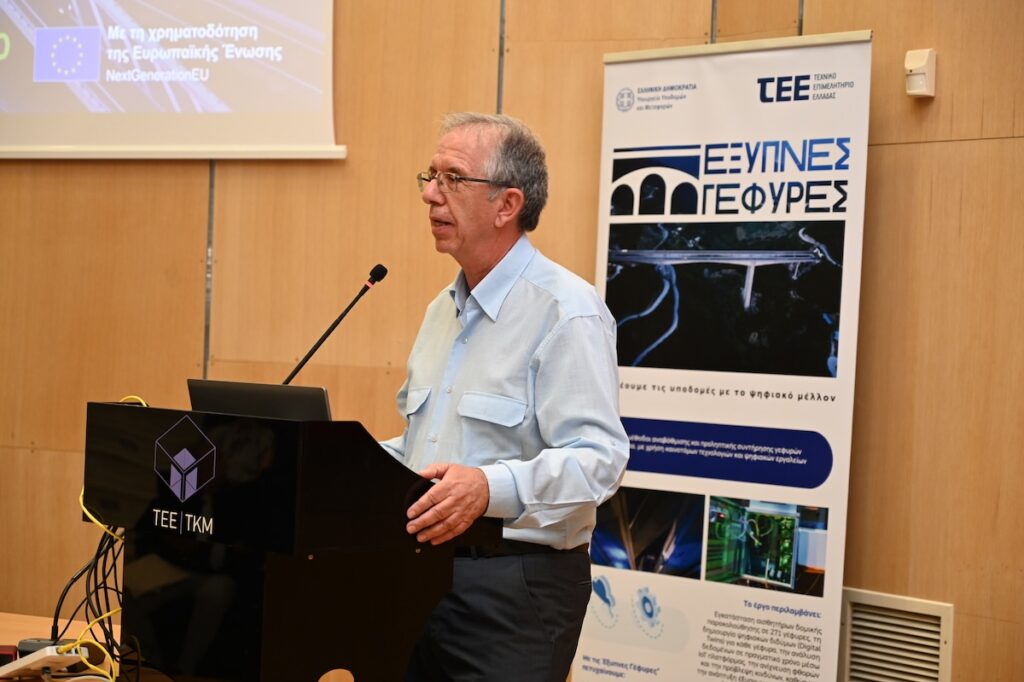
Έφτασε στη Θεσσαλονίκη το έργο «Έξυπνες Γέφυρες» – Οι νέες τεχνολογίες στην υπηρεσία της παρακολούθησης και προστασίας των υποδομών
Στη Θεσσαλονίκη πραγματοποιήθηκε η εκδήλωση παρουσίασης του έργου «Έξυπνες Γέφυρες», με έμφαση στη συμβολή των…
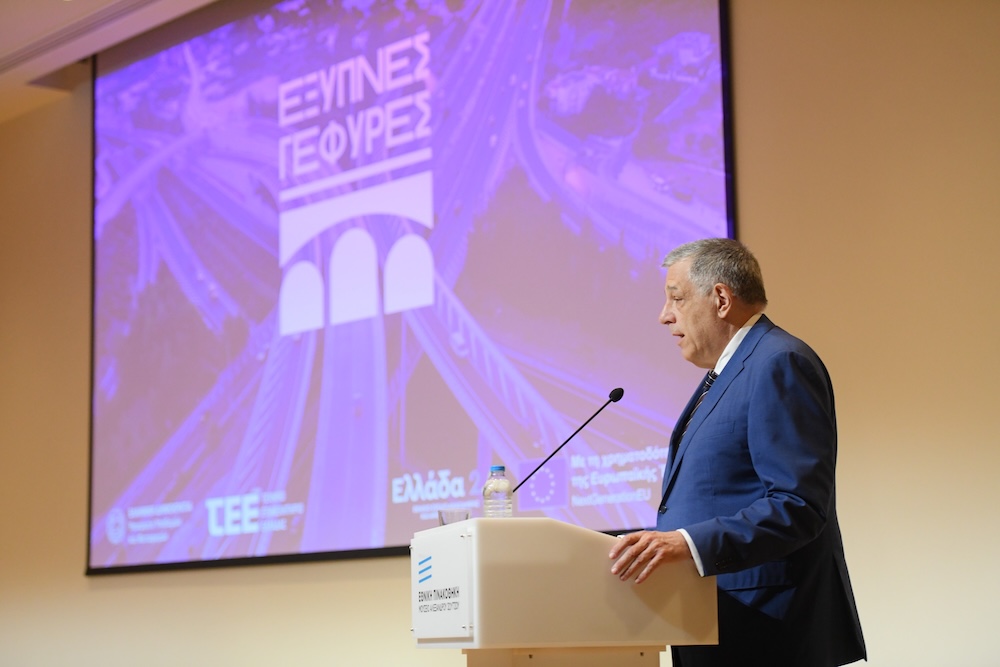
Παρουσιάστηκε στην Αθήνα το έργο «Έξυπνες Γέφυρες»
Στην Αθήνα πραγματοποιήθηκε η πρώτη εκδήλωση παρουσίασης του έργου «Έξυπνες Γέφυρες», με τη συμμετοχή εκπροσώπων…
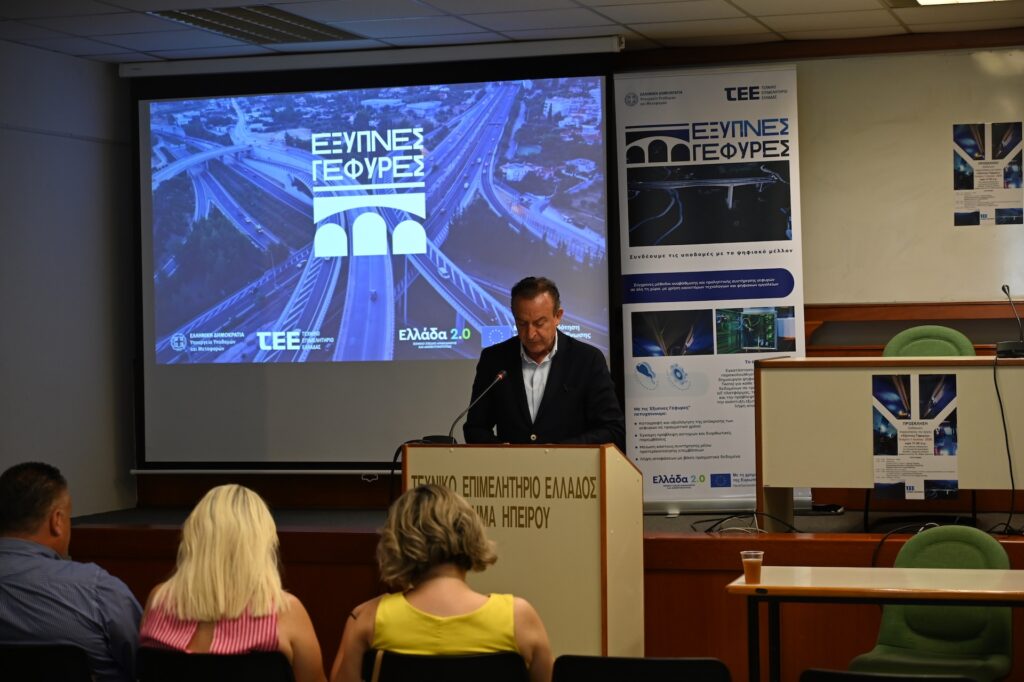
Το έργο «Έξυπνες Γέφυρες» παρουσιάζεται στα Ιωάννινα
Το Τεχνικό Επιμελητήριο Ελλάδας παρουσιάζει στα Ιωάννινα το έργο «Έξυπνες Γέφυρες», μια σημαντική πρωτοβουλία για…
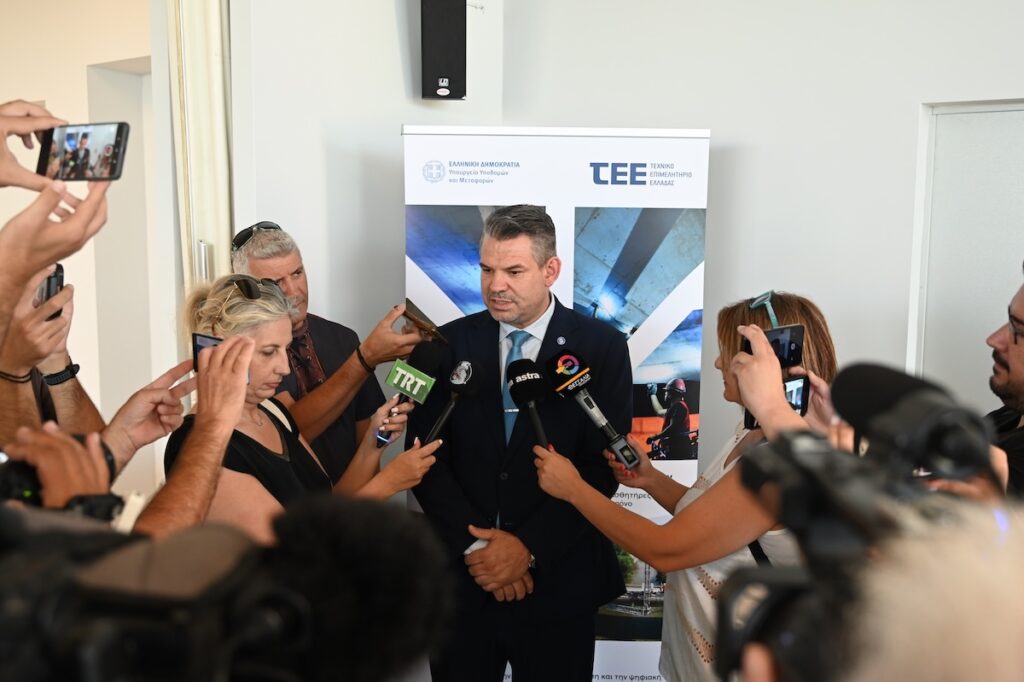
Παρουσιάστηκε στη Λάρισα το έργο «Έξυπνες Γέφυρες» – Ψηφιακές τεχνολογίες και καινοτομία για ανθεκτικές υποδομές που προστατεύουν τον πολίτη
Παρουσιάστηκε στη Λάρισα το έργο «Έξυπνες Γέφυρες», μια σημαντική πρωτοβουλία για τον ψηφιακό μετασχηματισμό της…
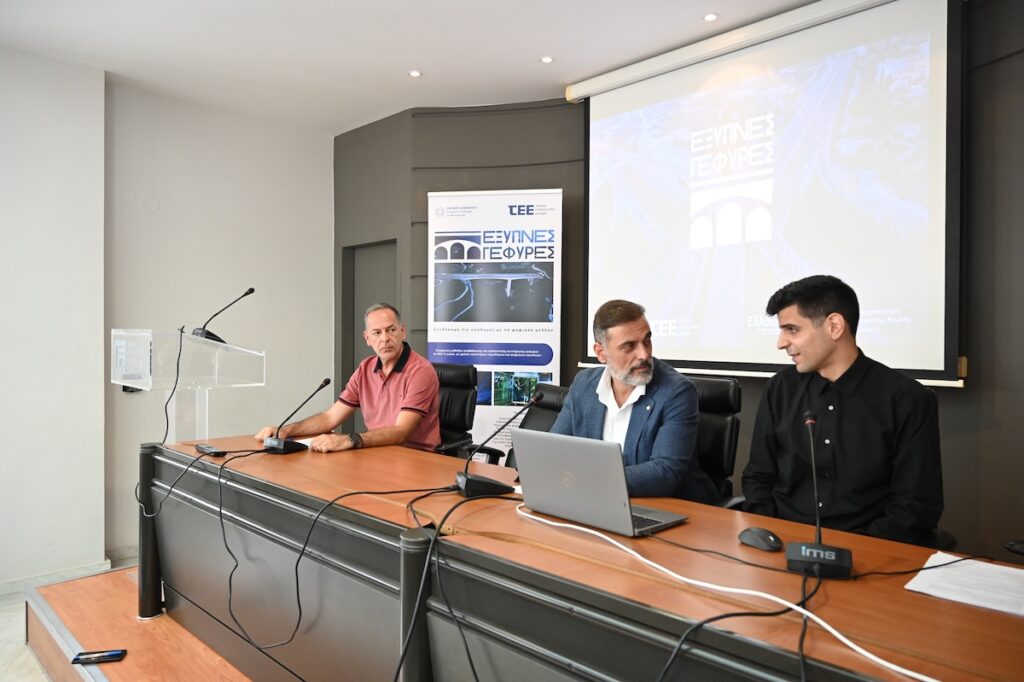
Παρουσιάστηκε στην Κοζάνη το έργο «Έξυπνες Γέφυρες» – Στο επίκεντρο η πρόληψη, η ασφάλεια και ο ψηφιακός μετασχηματισμός των υποδομών
Στην Κοζάνη παρουσιάστηκε το έργο «Έξυπνες Γέφυρες», με έμφαση στη συμβολή των ψηφιακών τεχνολογιών στη…

